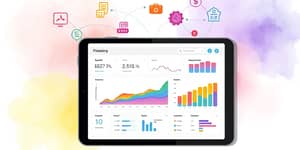
In today's fast-paced financial landscape, managing money can feel overwhelming and time-consuming.
However, financial automation offers a powerful solution to simplify your efforts and unlock new opportunities.
By leveraging software, artificial intelligence, and innovative tools, you can automate routine tasks and focus on what truly matters: strategic growth and personal prosperity.
Understanding Financial Automation
Financial automation involves using technology to handle repetitive financial processes with minimal human intervention.
This includes tasks like billing, bank reconciliations, reporting, and budgeting, which are often prone to errors when done manually.
With tools such as Robotic Process Automation (RPA) and AI, data is integrated in real-time, allowing for seamless and accurate management.
The core idea is to reduce manual work and enhance efficiency, enabling you to allocate resources more effectively.
Real-time data integration and predictive analytics empower businesses and individuals to make informed decisions swiftly.
The Key Benefits of Automating Your Finances
Automating your finances delivers numerous advantages that can significantly impact your financial health and success.
These benefits are backed by data and real-world examples, making a compelling case for adoption.
These benefits highlight how automation can transform your financial management, leading to tangible savings and growth that drive long-term success.
Key Processes You Can Automate
Many financial tasks are ideal for automation, saving you time and reducing errors across various areas.
By focusing on these processes, you can build a more efficient and reliable financial workflow.
- Credit management and billing, with automatic invoices and payment reminders.
- Cash flow forecasting and treasury management for real-time insights into liquidity.
- Preparation of financial statements and variance analysis to track performance.
- Budgeting and financial modeling based on historical data for accurate planning.
- Bank reconciliations and expense tracking to ensure accuracy and consistency.
- Regulatory compliance and fraud detection for enhanced security and peace of mind.
Automating these processes ensures consistency and reliability, allowing you to focus on strategic initiatives.
Top Tools for Financial Automation in 2025-2026
Choosing the right tools is crucial for effective automation, and the market offers a wide range of options for different needs.
Here are some of the best tools for businesses and individuals, designed to enhance your financial management.
Business Tools for 2026
These tools are tailored for enterprises, offering advanced features and integration capabilities.
- Savant: Provides flexible integration with platforms like Salesforce and Google, with AI templates for forecasting.
- Microsoft Dynamics: An integrated ERP/CRM system with predictive analytics and real-time reporting.
- Xero: Features a simple interface with feeds from over 21,000 banks and multi-currency support.
- QuickBooks: Offers automatic invoicing, payroll, a mobile app, and bank encryption for security.
- NetSuite: Includes customizable dashboards, workflow automation, and global support for scalability.
- FreshBooks: Focuses on payment reminders, project tracking, and fiscal reports for small businesses.
- Spendesk: Manages corporate cards, automatic approvals, and budget control for expense management.
- Solvexia: Provides no-code reconciliation, real-time analytics, and compliance features for efficiency.
- Zoho: Enables recurring invoicing, custom bank rules, and workflow customization for flexibility.
AI-Powered Financial Tools for 2025
AI-driven tools are revolutionizing finance with smart features that automate complex tasks.
- Anaplan: Focuses on FP&A with AI features like PlanIQ and CoPlanner for advanced planning.
- BlackLine: Specializes in financial close with reconciliation and anomaly detection for accuracy.
- Other tools for receivables, spend, and reporting offer autonomous forecasting and AI agents for efficiency.
Personal Tools for Individuals and Investors
For personal finance, these tools help manage budgets, investments, and savings with ease.
- Mint: Used by over 25 million users for bill tracking and budgeting to monitor finances.
- YNAB: Assigns "jobs" to every dollar, with users saving an average of $600 per month.
- Cleo: Serves 3 million users with AI-powered advice and savings accounts with interest.
- Tiller: Automatically categorizes expenses for monthly budgets, simplifying tracking.
- PocketSmith: Offers scenario forecasting and calendar visualization, with plans up to $19.95 per month.
These tools cater to diverse needs, enhancing financial management effortlessly and making automation accessible to everyone.
How to Design Your Financial Automation Strategy
Implementing automation requires a thoughtful approach to maximize benefits and avoid common pitfalls.
By following these steps, you can build a robust strategy that drives long-term success.
- Assess your current financial needs and identify pain points that automation can address.
- Choose the right tools based on integration capabilities, features, and scalability for your goals.
- Integrate with existing systems like ERPs to ensure better visibility and data consistency.
- Measure ROI by tracking metrics such as time saved, accuracy improvements, and cost reductions.
- Start with simple tools and scale up gradually as you become more comfortable with automation.
- Ensure security measures like single sign-on (SSO) and regular backups are in place to protect data.
This structured approach helps you design a winning strategy that transforms your financial operations.
Success Stories and Key Statistics
Real-world examples demonstrate the powerful impact of financial automation on both businesses and individuals.
These success stories highlight the tangible benefits and widespread adoption of automated solutions.
- Mint has over 25 million users for bill tracking and investments, showcasing its popularity.
- Cleo serves 3 million users with personalized AI advice, improving financial literacy.
- YNAB helps users save an average of $600 in the first month, proving its effectiveness.
- ERPs enhance productivity and competitiveness, especially in volatile markets.
These statistics underscore how automation drives tangible benefits and empowers users to achieve their financial goals.
Best Practices for Financial Automation
To ensure success, follow these guidelines when automating your finances, which help maintain control and adaptability.
Adhering to best practices can prevent issues and enhance the efficiency of your automation efforts.
- Prioritize security by using tools with encryption and secure authentication methods like SSO.
- Opt for scalable solutions that can grow with your needs, avoiding limitations as you expand.
- Use no-code options for easier implementation, especially if you're new to automation.
- Integrate with comprehensive systems like ERPs for full visibility and streamlined operations.
- Regularly review and update your automation processes to adapt to changing financial landscapes.
By following these practices, you can build a reliable and effective automation framework that supports your financial journey.
Conclusion: Take Action Today
Financial automation is no longer a luxury but a necessity for efficient and effective money management.
By leveraging the right tools and strategies, you can save time, reduce errors, and boost growth in both personal and business finances.
Start with a free trial of tools like Xero or YNAB to experience the benefits firsthand and build momentum.
Embrace automation to design your winning financial strategy, unlocking new opportunities for prosperity and achieving your goals with confidence.
Referencias
- https://stripe.com/es-us/resources/more/what-is-finance-automation-how-it-works-benefits-for-businesses-and-best-practices
- https://savantlabs.io/blog/finance-automation-tools/
- https://www.processmaker.com/es/blog/benefits-of-finance-process-automation/
- https://superagi.com/the-ultimate-ai-budgeting-showdown-comparing-the-best-personal-finance-tools-for-investors-and-savers/
- https://stripe.com/es/resources/more/what-is-finance-automation-how-it-works-benefits-for-businesses-and-best-practices
- https://www.stack-ai.com/blog/ai-finance-tools
- https://www.triangle.es/noticias/beneficios-automatizacion-financiera-con-erps/
- https://tiller.com/8-tools-to-automate-finances/
- https://www.ibm.com/es-es/think/topics/finance-automation
- https://www.expensesorted.com/blog/finance-automation-tools-personal-use-2025
- https://blog.pleo.io/es/automatizacion-financiera
- https://www.meniga.com/guides/cashflow-forecasting-tools/
- https://www.oracle.com/es/erp/finance-automation/
- https://deliberatedirections.com/best-digital-financial-tools-guide/
- https://www.solfico.es/blog/que-es-la-automatizacion-en-servicios-financieros-y-como-aplicarla/
- https://www.datasnipper.com/resources/top-artificial-intelligence-tools-financial-service-professionals
- https://www.cctadvisors.com/como-la-automatizacion-financiera-puede-mejorar-la-eficiencia-en-tu-empresa/
- https://www.innoqubit.com/blog/optimizacion-procesos-financieros-automatizacion-enfoque-practico/